If you own a property in Ayr, the age and type of it tells you a great deal about what your electrics are likely to be doing, what work is likely to cost, and what the law expects of you.
Within a couple of miles of the town centre you go from Victorian sandstone villas to 1930s semis, post war estates, riverside flats and new build developments. Each of those brings a different set of issues.
This article covers what to expect from your own property, what Scottish law requires of homeowners and landlords, and where the money usually goes.
If you own an older sandstone property
The Victorian and Edwardian stock, the sort you see around Wellington Square, Racecourse Road and out towards Alloway, is beautiful to live in and expensive to wire. It is worth understanding why, because it affects every quote you will be given.
Solid sandstone walls with no cavity mean there is nowhere convenient to run cables. Cutting channels into sandstone is slow, messy and not something you want done to a property with original features worth protecting. That is why a rewire in a period property costs more than the same job in a 1980s semi, and why your options are usually running cables under floors, through existing voids, or accepting some tidy surface trunking where it can be kept out of the way.
The other thing about a house of this age is what is already in the walls. Depending on when it was last touched, that can mean old rubber insulated cable that has gone hard and crumbly, lighting circuits with no earth, and a fusebox with rewireable fuses still in it.
None of that means your house is about to burn down. What it does mean is that if you are planning a new kitchen or an extension, the honest answer may be that you are better rewiring than adding to something already at the end of its life. Spending money extending a worn out installation is money you will spend again.
If your property has not been rewired since the 1970s, get it looked at before you commit to anything else.
If you are near the seafront
Salt air is hard on anything metal and outdoors. Meter boxes, outside lights, garden sockets and outbuilding supplies all corrode faster in Ayr than they would twenty miles inland.
If you have had outdoor electrics fail early, this is usually why. The fix is having them specified for a coastal setting in the first place, with the right weather rating and materials, rather than fitting the cheapest option and paying again in three years.
Worth raising with anyone quoting you for outdoor work. If they do not mention it, ask.
If you are in a post war or later property
Around Lochside, Dalmilling, Whitletts and similar, the wiring is usually more straightforward. What you tend to have instead is the accumulated effect of decades of small alterations. Extra sockets added over the years, a shower fitted, a kitchen rearranged, a garage converted, all done at different times by different people to different standards.
The wiring itself may well be sound. The record of what has been done to it usually is not, and that becomes your problem when you sell. A condition report is the cheapest way to find out what you actually have rather than what you assume you have.
What Scottish law actually requires of you
This catches people out constantly, usually because they have read guidance written for England and assumed it applies here. It does not.
Scotland has no Part P. If you have read that your electrician can self certify the work, that is the English system. Electrical work in Scotland falls under Scottish Building Standards instead, and depending on what is being done, a building warrant may be needed. Ask before the work starts, not after.
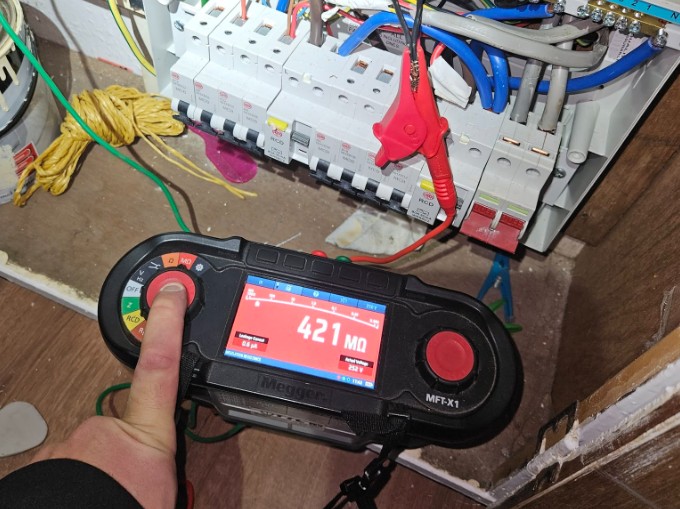
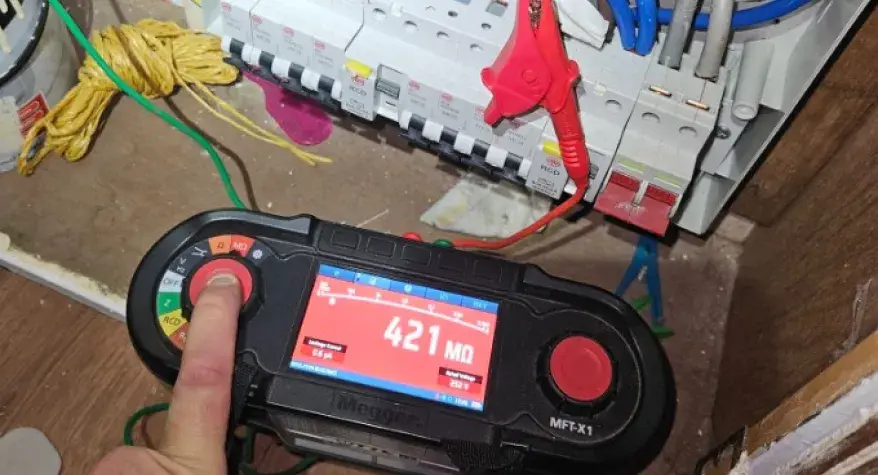
Private rented properties need an electrical safety inspection every five years. Under the Repairing Standard set out in the Housing (Scotland) Act 2006, a private landlord must have an inspection carried out before the property is let for the first time, and then at intervals of no more than five years. It covers two things: the fixed installation, recorded in an EICR, and any appliances the landlord supplies, recorded through in service testing. The tenant has to be given a copy, and a new tenant has to be given the most recent one before the tenancy starts.
RCD protection is now part of that standard. Changes to the Repairing Standard that came into force in March 2024 mean a property without appropriate RCD protection does not meet the standard. If a rental property still has an older board with no RCD protection, that is not a recommendation to consider, it is a gap that needs closing.
Interlinked fire and smoke alarms are required in every Scottish home. Not just rented ones. Since February 2022 every home in Scotland, owned or rented, new build or two hundred years old, has needed a smoke alarm in the room used most during the day, a smoke alarm in every circulation space on each floor such as hallways and landings, and a heat alarm in the kitchen. All of those must be ceiling mounted and interlinked, so that when one goes off they all go off. Where there is a carbon fuelled appliance or a flue, a carbon monoxide alarm is needed in the same room, and that one does not have to be interlinked.
The alarms have to be either mains wired or powered by a sealed tamper proof long life battery. Units with replaceable batteries do not meet the standard. The interlinking can be done by cable or by radio.
In an older Ayr property, retrofitting a fully mains wired interlinked system is not always practical, and sealed battery units that link by radio are often the sensible answer. Either complies. Anyone telling you it has to be hard wired is not giving you the full picture.
One thing worth knowing if you are selling: when a property changes hands in Scotland, the surveyor checks alarm compliance and it goes in the Home Report. It is far cheaper to sort it now than to have it flagged mid sale.
If you let a property in Ayr
Your electrical obligations come down to four things. A current inspection report covering the fixed wiring. Records for any appliances you supply. Compliant interlinked alarms. And certificates for any work carried out, kept somewhere you can actually find them.
The most common problem is not dangerous wiring. It is missing paperwork. The work gets done, it gets done correctly, and then nobody issues or keeps the certificate. Two years later the property is being sold or inspected and there is nothing to show for it, which means paying to have it all assessed again.
Keep every certificate. In a rental property the paperwork is worth as much as the work.
If you own a flat or a property on a shared close
The complication here is usually who is responsible for what. Common stair lighting, shared supplies and metering arrangements that made sense in 1950 and do not now.
Work in these properties often needs a conversation with your neighbours or the factor before anything can be switched off, because isolating one thing can affect several homes. Worth sorting that out before you book a day off work for the electrician to arrive.
Before you hire anyone
Three things worth checking, whoever you use.
Are they registered with a recognised body such as SELECT, NICEIC or NAPIT, and does that registration cover the work you are having done. Is their public liability insurance current. And have you got a written quotation setting out what is included, rather than a number given over the phone.
You should also expect a certificate at the end, not just a receipt. If nobody mentions certification at any point in the conversation, that tells you something.
Talk to us
We work across Ayr and the surrounding area, and much of what makes a job go smoothly is having seen your type of property before. Knowing what is likely to be behind the wall. Knowing which jobs need a warrant. Knowing that a seafront property needs specifying differently.
If you have something that needs looking at, whether that is a full rewire, a board upgrade, alarms bringing up to the Scottish standard, or just an inspection so you know where you stand, get in touch and we will come and have a look.
We are SELECT approved and a Which? Trusted Trader, with over 15 years working across Ayrshire.